What is Formwork Installation Procedure?
Formwork installation procedure involves the following operations:
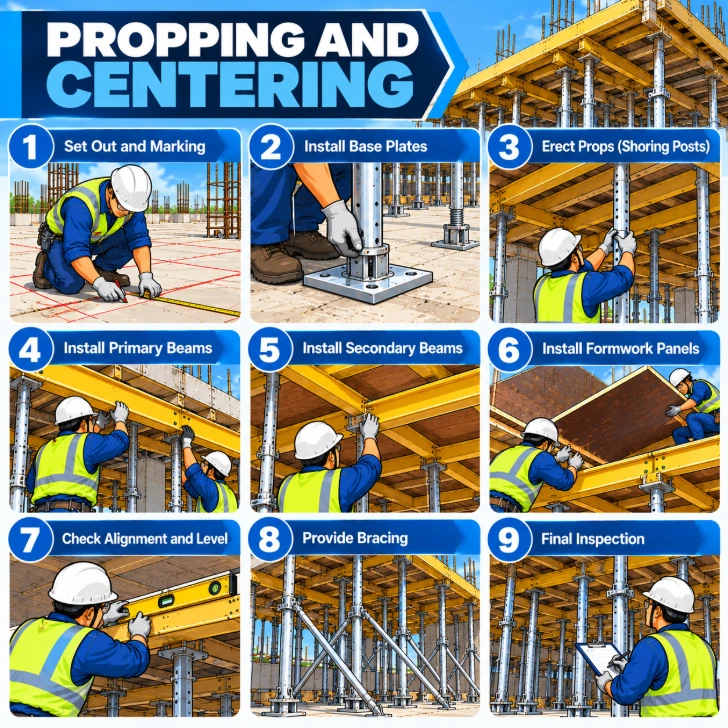
Propping and Centering
- Propping is a system of structural members used temporarily to support loads during construction. The forces arising from these loads must be fully resolved, using props or columns to provide all the support needed for the work under construction, such as beams, formwork but are not limited to only the above mentioned.
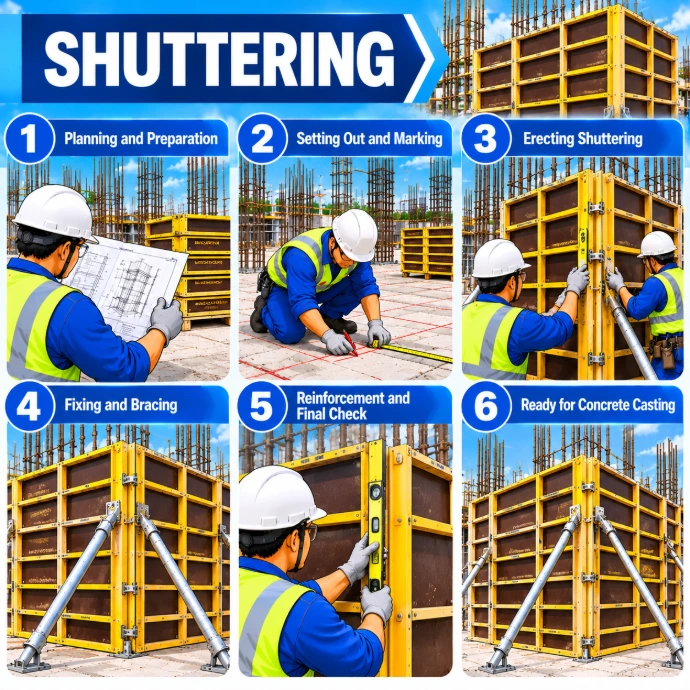
Shuttering
- Formwork (Shuttering) acts as moulds for pouring concrete.
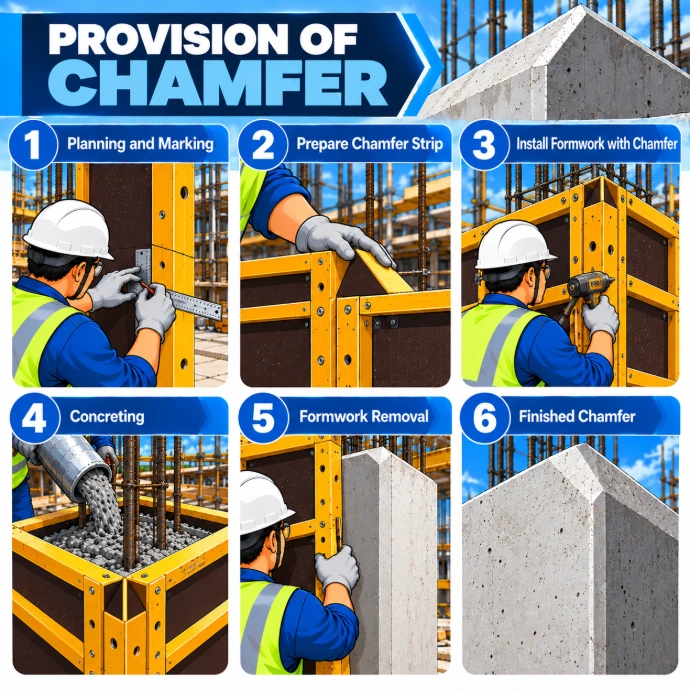
Provision of Chamfer
- The formation of a sharp nice corner is practically difficult and the concrete at corners is easily chipped and broken into pieces during the removal of concrete formwork. Hence, the provision of chamber could protect the corner from chipping when striking formwork.
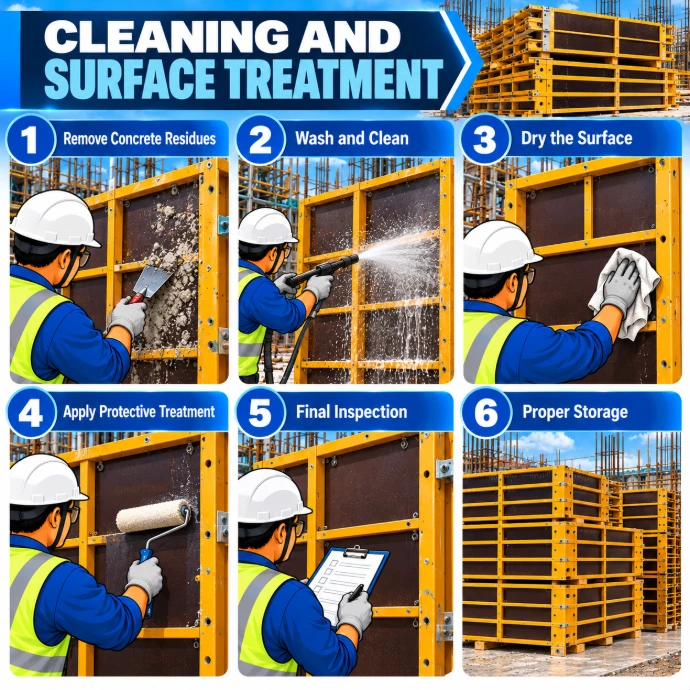
Cleaning and Surface Treatment
Formwork is a significant investment for contractors who reuse the same systems across multiple projects. Regular maintenance helps keep panels, frames, and accessories in good condition and extends their service life.
Poor cleaning, handling, or storage can damage form surfaces and structural components. Over time, this reduces reuse cycles, affects concrete finish quality, and increases repair or replacement costs.
A consistent maintenance routine helps prevent these issues. Proper cleaning, correct use of release agents, routine inspection, timely repairs, and proper storage all contribute to better performance and longer service life.
Step 1: Clean Formwork After Each Use
Cleaning formwork promptly after stripping is one of the simplest ways to maintain surface quality and extend its service life. Concrete residue left on the form face can harden over time, making later removal more difficult and potentially leaving marks or uneven areas on the next concrete surface.
Avoid aggressive scraping or impact methods that may scratch, dent, or remove protective coatings. The appropriate cleaning method should always match the formwork material and the manufacturer’s recommendations
Step 2: Apply Form Release Agent Correctly
Form release agents create a separating layer between the form face and fresh concrete, making stripping easier while helping protect both the formwork and the finished concrete surface.
Step 3: Inspect Formwork Regularly
Repeated concrete pressure, handling, lifting, assembly, and dismantling can gradually wear or damage formwork components. Routine inspections help identify problems before the system is used again.
Step 4: Store Formwork Properly
Proper storage protects formwork between pours and during longer periods of inactivity. Moisture, standing water, direct ground contact, and prolonged weather exposure can accelerate corrosion, swelling, coating deterioration, and other forms of damage.
Keep panels and accessories off the ground using suitable supports or dunnage, and store them on a stable, well-drained surface. Stack panels securely to prevent distortion, slipping, or accidental damage.